
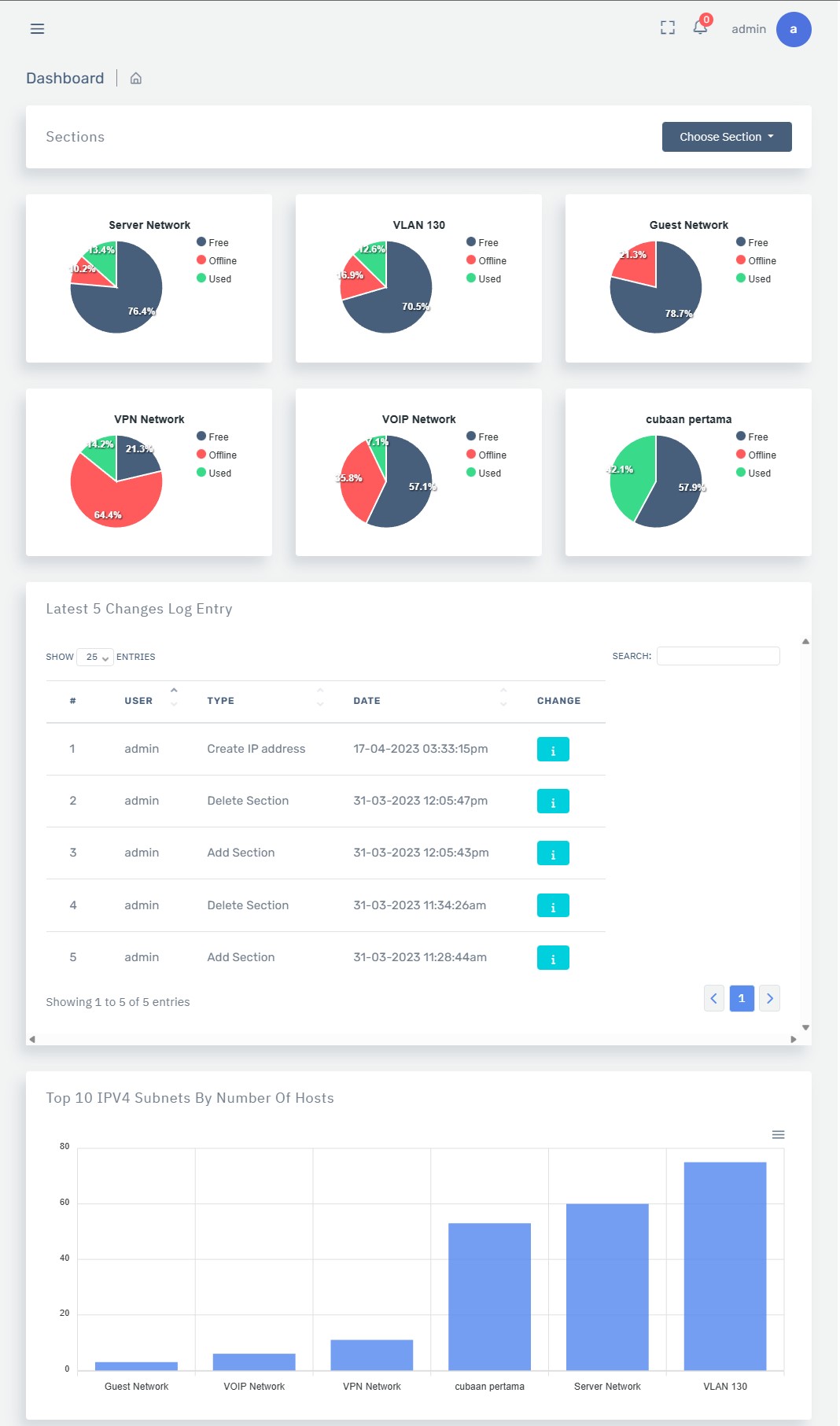
IP address monitoring is the process of tracking and monitoring the status of IP addresses. This includes detecting and alerting on unauthorized IP address changes.
This module is connected to a specific network refers to the process of discovering and cataloging IP addresses associated with devices within that network. This task is crucial for effective IP Address management, as it allows network administrators to maintain an up-to-date inventory of devices, track IP address allocations, and identify potential IP address conflicts.
By receiving real-time updates, administrators can quickly become aware of any new devices connecting to the network or network failures. This enables them to stay informed about changes happening within the network environment and promptly address any issues that may arise.
Uptime monitoring is the process of tracking and measuring the availability of a website, server, or other IT system. It involves periodically checking the system's status and alerting the appropriate personnel if the system becomes unavailable.
Server or website uptime monitoring is a critical task that involves continuously monitoring the availability and responsiveness of servers and websites. It ensures that servers and websites are accessible to users, minimizes downtime, and helps maintain a satisfactory user experience. Besides, When a server or website goes down, the module records the downtime duration and provides detailed reports on the incident. This information helps administrators investigate the root cause, troubleshoot issues, and implement preventive measures to reduce future downtime occurrences.
URL performance monitoring and inspection is a specific task within the uptime monitoring module that focuses on evaluating the performance of specific URLs or web pages. It involves measuring and analyzing various performance metrics to assess the speed, availability, and overall user experience of accessing those URLs. By continuously monitoring and analyzing performance metrics, administrators can optimize the performance of critical URLs, enhance the user experience, and ensure that web pages are accessible and responsive to users' expectations.
The monitoring module measures the time it takes for the host or website to respond to the simulated request. This includes the time taken for the server to receive, process, and send a response back to the monitoring module.


Server monitoring is the process of tracking and monitoring the performance and health of servers. This includes tracking metrics such as CPU usage, memory usage, disk usage, and uptime. Server monitoring can also be used to detect and alert on potential problems, software errors and performance degradation.
Real-time monitoring allows administrators to identify
resource bottlenecks,
performance issues, or abnormal behavior and take immediate action to
optimize resource allocation and troubleshoot any problems.
Converting never-ending logs into attractive and readable graphs
involves
transforming log data into visual representations such as charts,
graphs, or
dashboards. Visualization tools or software process the log data and
present it
in a visually appealing manner, making it easier for administrators to
interpret
and derive insights. Graphs can display trends, patterns, correlations,
and
anomalies in the log data, providing a more intuitive understanding of
system
behavior and performance.
Access all your server insights in a unified dashboard. This is where our Simplified Management feature steps in, offering a centralized platform to oversee and control your entire server ecosystem effortlessly. This consolidated view enables you to make informed decisions based on comprehensive data.


Difficulties managing IT assets due to inaccurate/missinginformation, limited
tracking, insufficient monitoring andreporting,
delayed issue detection, and scaling are thechallenges that a person faced
before.
Thus, we are implementing an Inventory module that can utilize barcode to
streamline asset tracking and
improveaccuracy. By tagging assets with unique identifiers, itbecomes easier to
scan and update asset information,
tracktheir location, and maintain an accurate inventory. Thispurpose can keep
track of the organization's device and
their current users. They also can store the license number,device model,
warranty date and any other information of
the hardware. By that, the organization can be up to date with all of their
software subscriptions and renewal dates.
Padurus develop few added in tools in the system that canperform more reliable and accurate ping lookups, DNS lookups, and etc. This could involve optimizing network protocols, enhancing network monitoring tools, or implementing algorithms that provide more precise latencyand packet loss information.


